Building a Modern Fleet Management Platform
Fleet managers were juggling outdated software and Excel workarounds to do their jobs. I led research, UI overhaul, and workflow redesign to replace that with a platform people actually want to use.
team:
2 Product Managers
2 Designers
5 Developers
ROLE:
Product Designer
timeline:
12 months
Overview
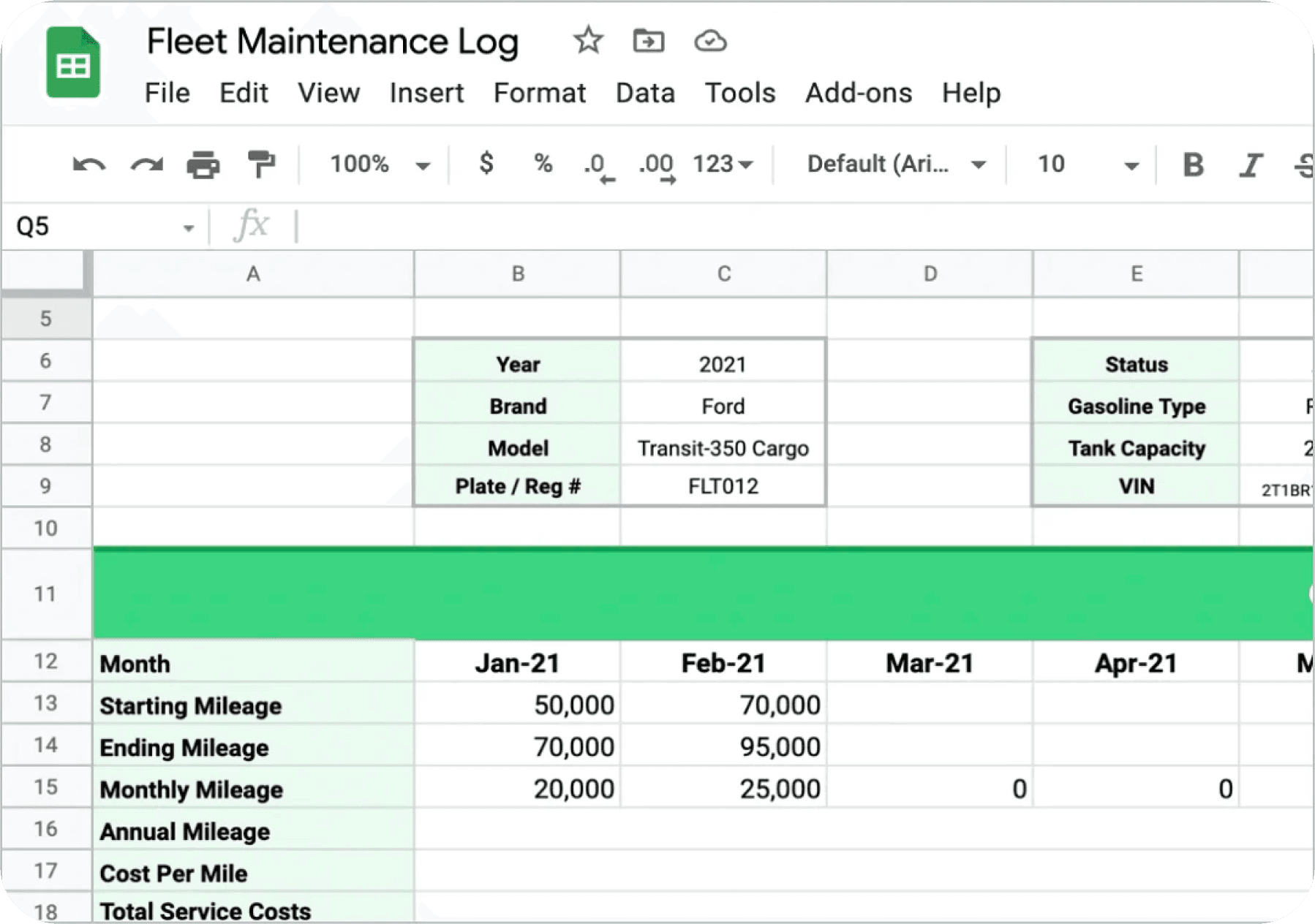
Versett partnered with a transportation company to build a fleet management platform from scratch. Fleet managers were running their operations across disconnected tools — spreadsheets, legacy software, and manual processes with no single source of truth.
We approached the project in two phases: a Proof of Concept to validate product-market fit with key decision makers, followed by a full MVP build.
Phase 1: Proof of Concept
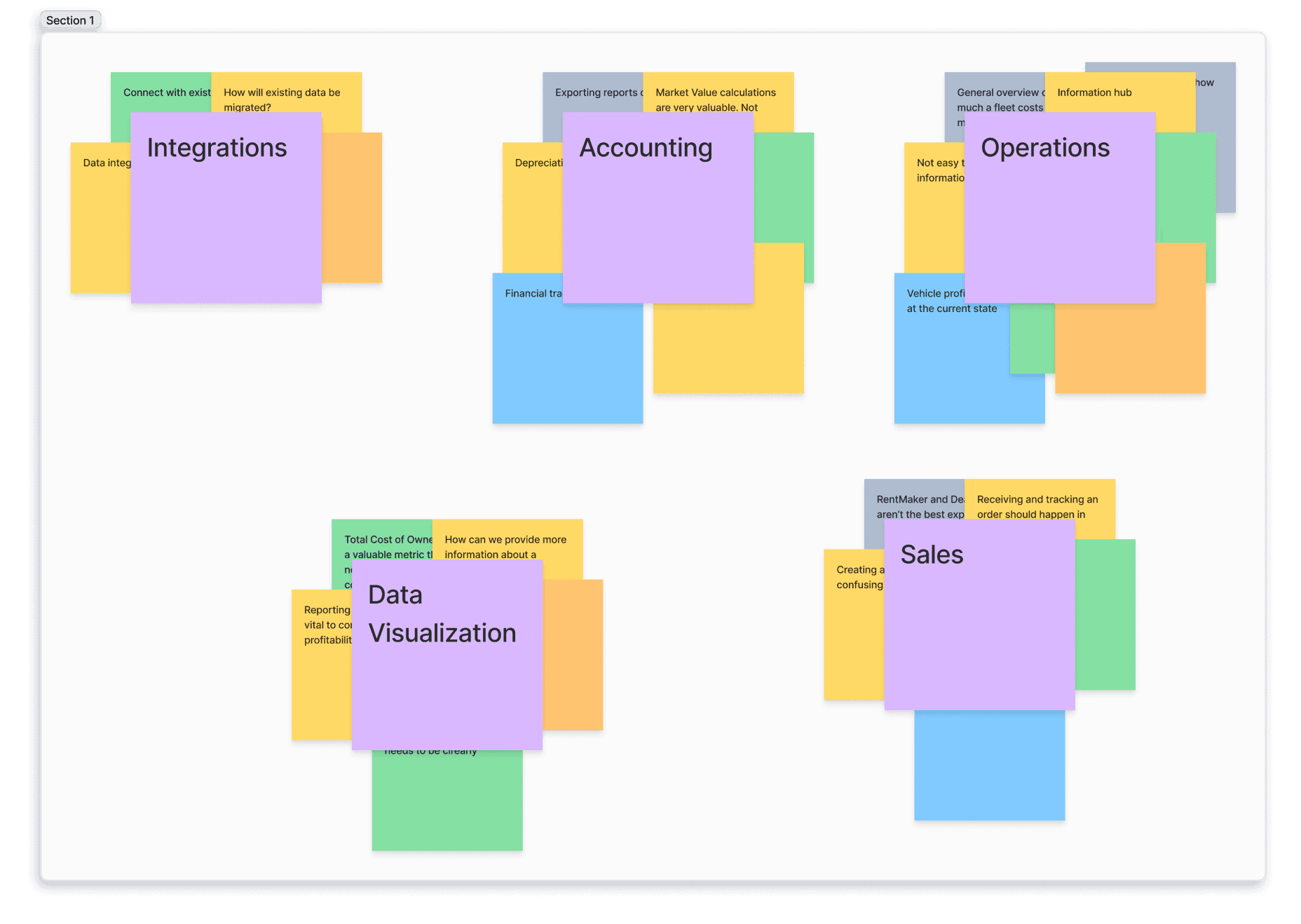
To understand what fleet managers actually needed, we interviewed 11 people across roles — fleet managers, operations managers, accounting directors, and sales managers — and observed 4 participants in their working environments.
Three things became clear:
Processes were entirely manual and unstandardized across the industry
Fleet managers had no single place to find the information they needed to make decisions
A comprehensive platform would fundamentally change how they did their jobs
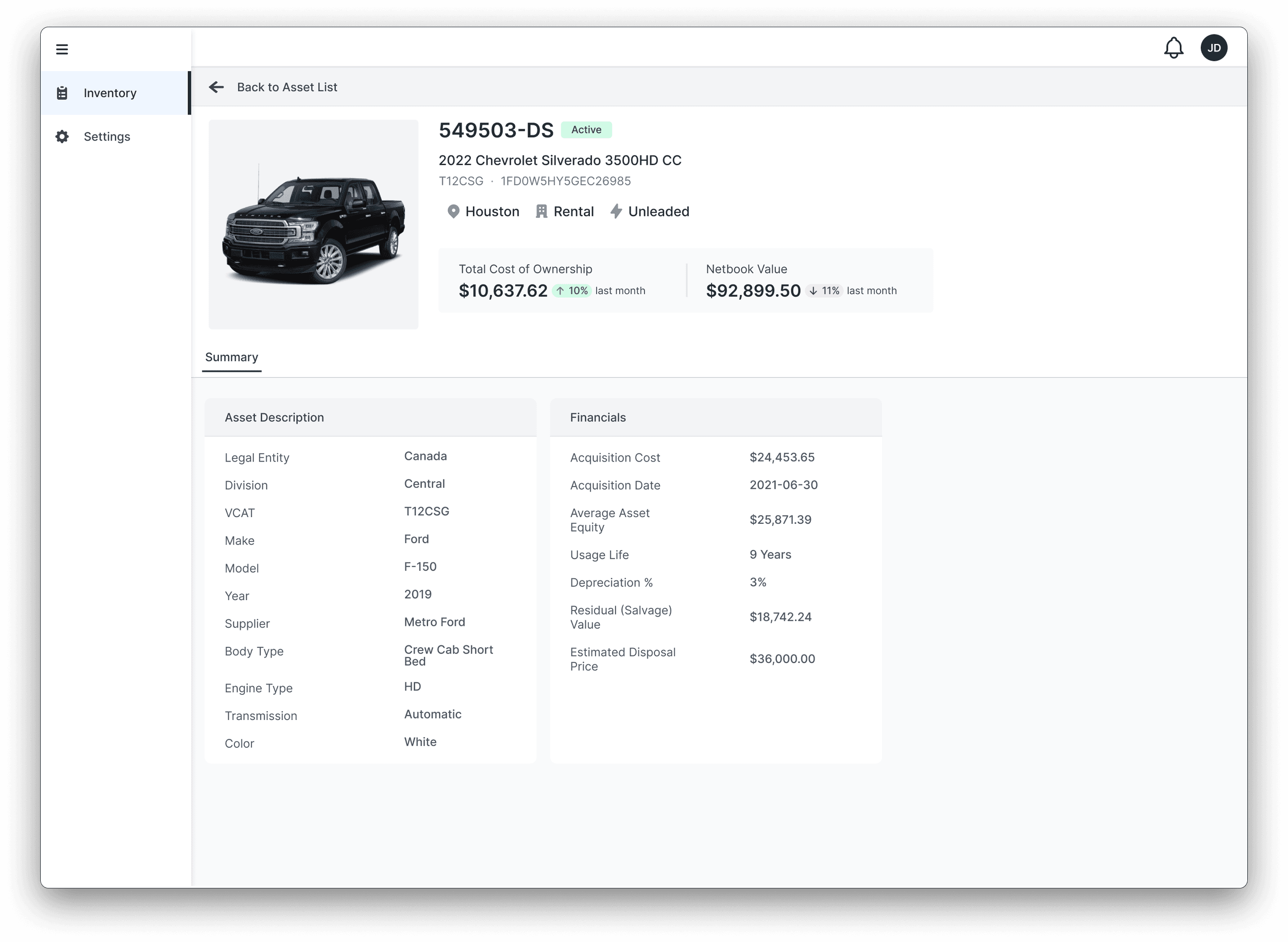
We built a conceptual prototype focused on two core features: an asset inventory giving full visibility across the fleet, and an asset detail view surfacing financial history, vehicle specs, and key metrics like Net Book Value and Total Cost of Ownership.
The PoC was presented to key decision makers at Driving Force and greenlit for full development.
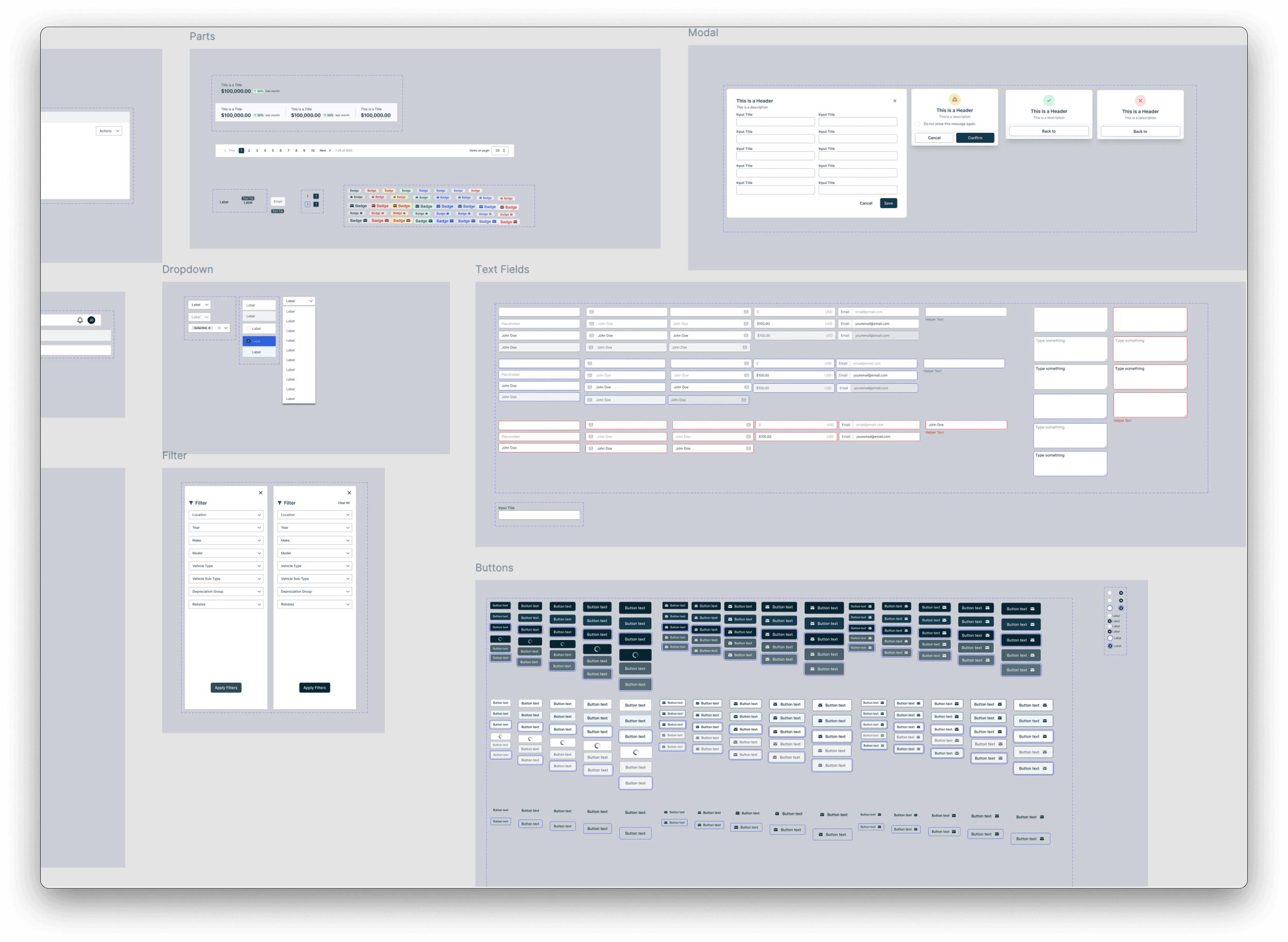
Proof of Concept Outcome
The PoC was tested with Driving Force's internal team and external fleet managers. The response confirmed strong product-market fit — the concept resonated most because of how much it consolidated into one place, replacing the fragmented tool stack they'd been working around for years.
That signal shaped the MVP's focus: operations, sales, and accounting workflows.
Phase 2: MVP
Building on the PoC, the MVP focused on three workflow areas identified through research: operations, accounting, and sales. The design direction was anchored on three principles:
Familiarity
reference patterns users already know to reduce learning curve.
Productivity
leverage integrations to eliminate manual input wherever possible.
Informative
surface comprehensive, customizable data so decisions don't require leaving the platform.
What We Built
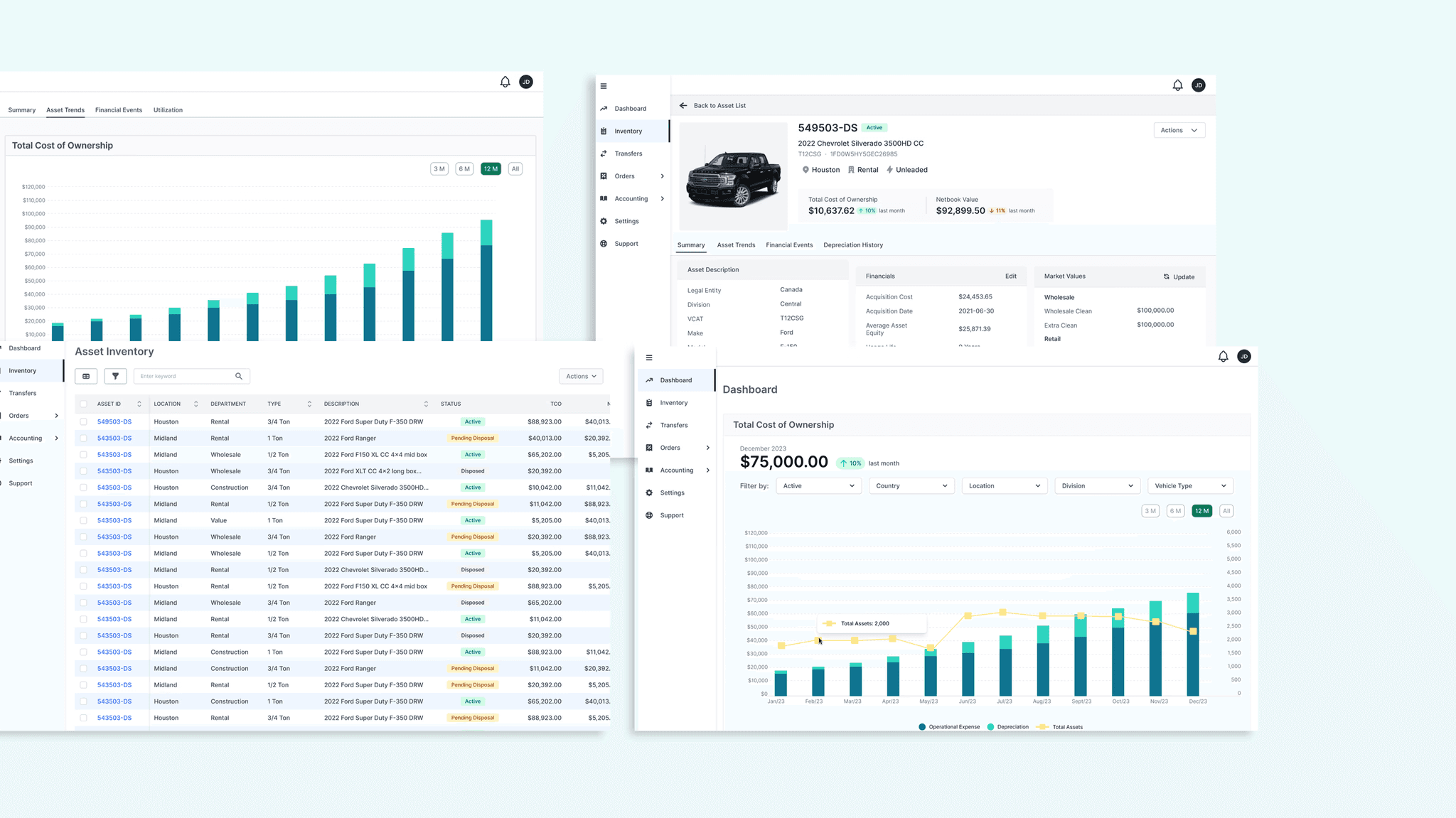
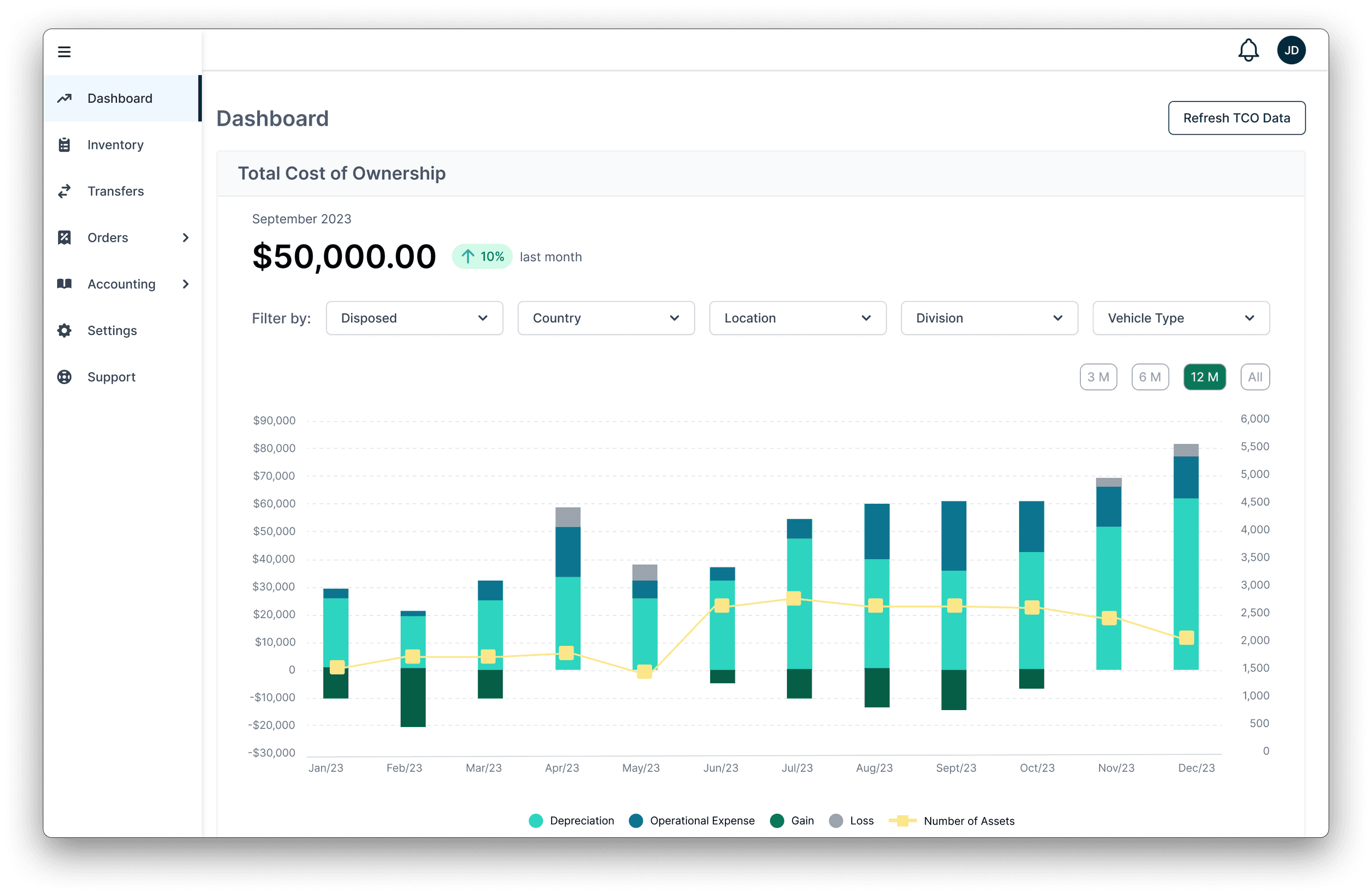
Dashboard — a bird's-eye view of Total Cost of Ownership, filterable by location, division, and vehicle type. Fleet managers could see the health of their entire fleet at a glance without touching a spreadsheet.
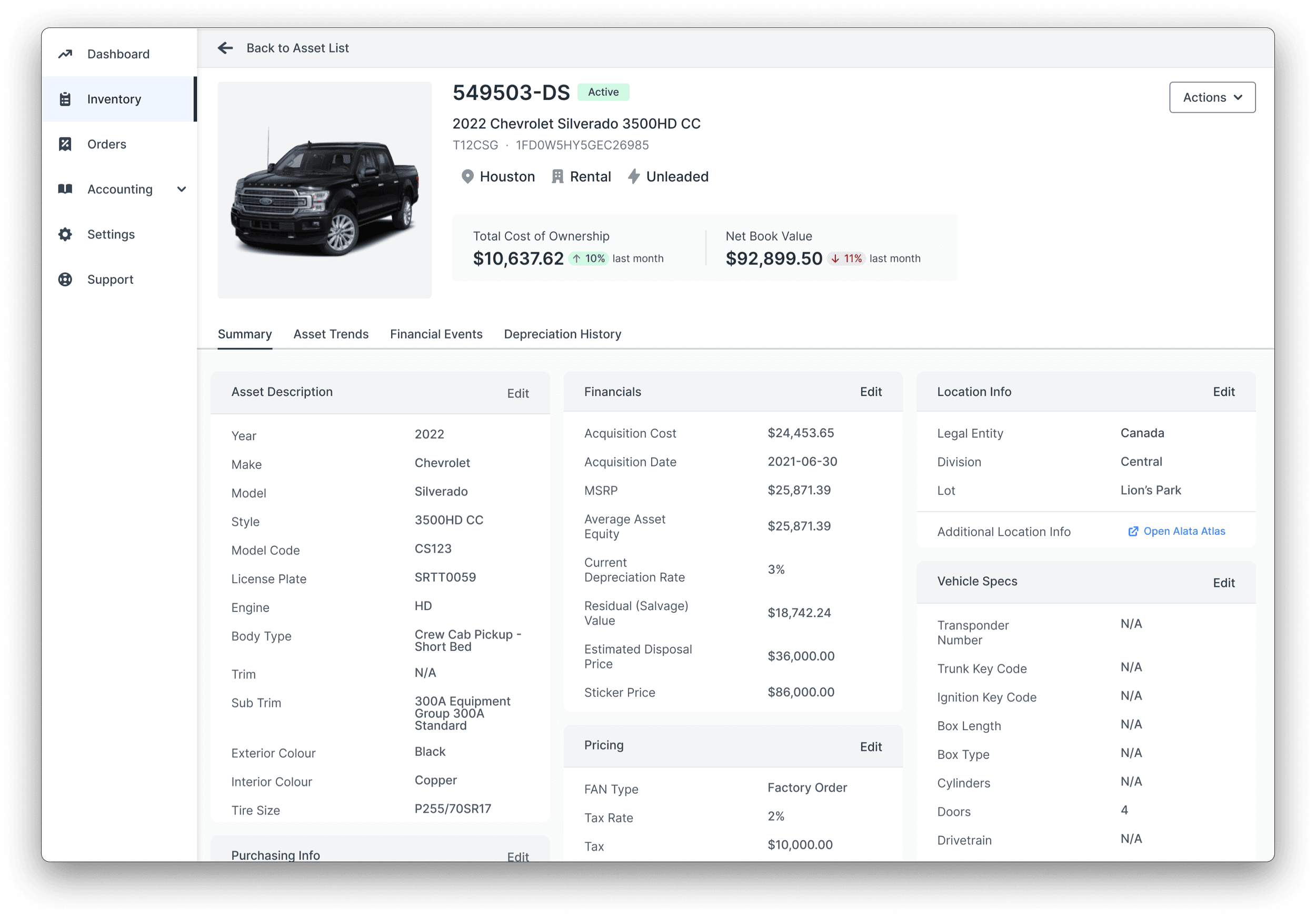
Vehicle Profile — expanded from the PoC to serve accounting, sales, and operations in one place. Asset Trends, Financial Events, and Depreciation History gave each team the data layer they needed.
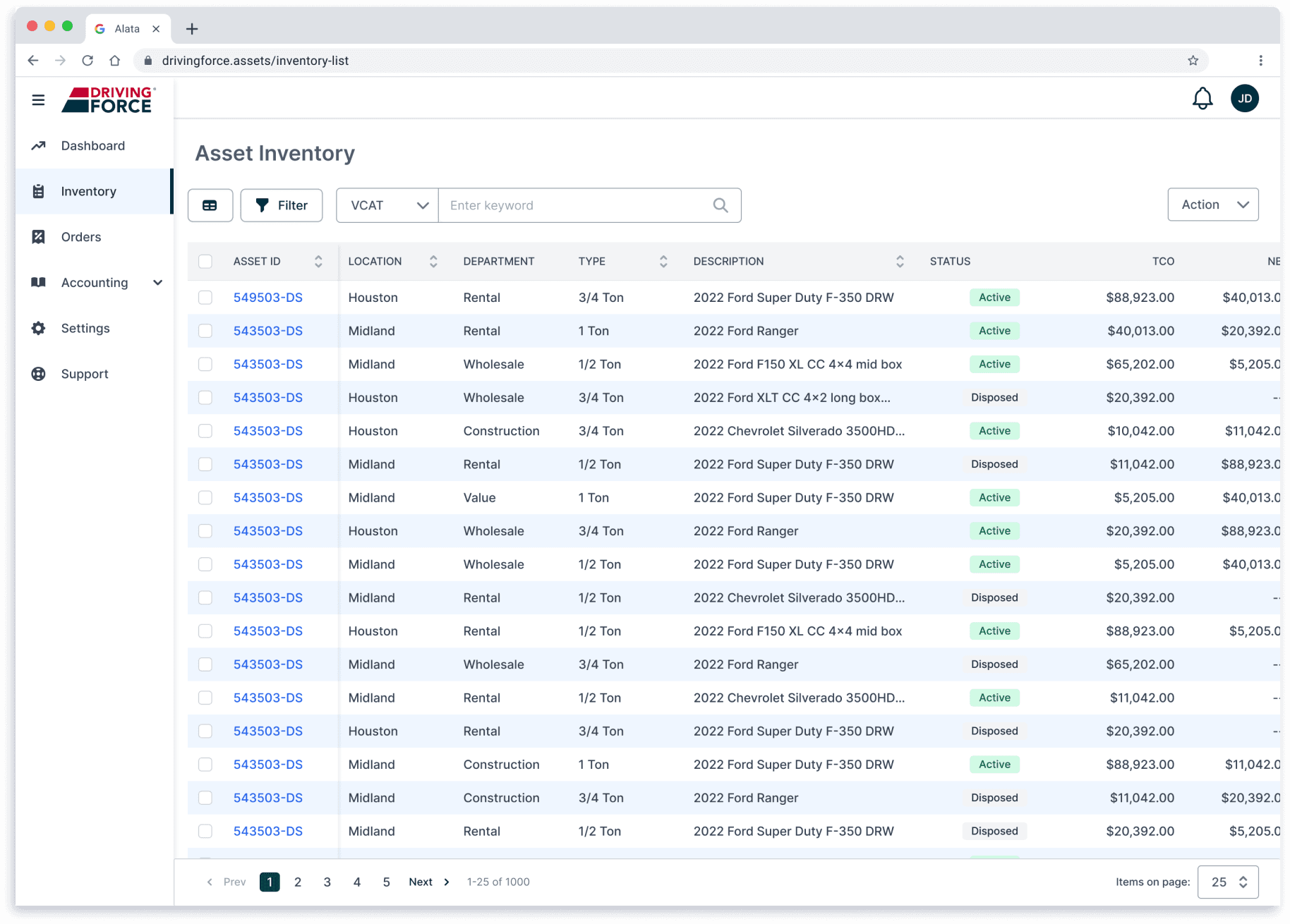
Inventory — dynamic filtering, search, table view customization, and bulk actions replaced the static list from the PoC.
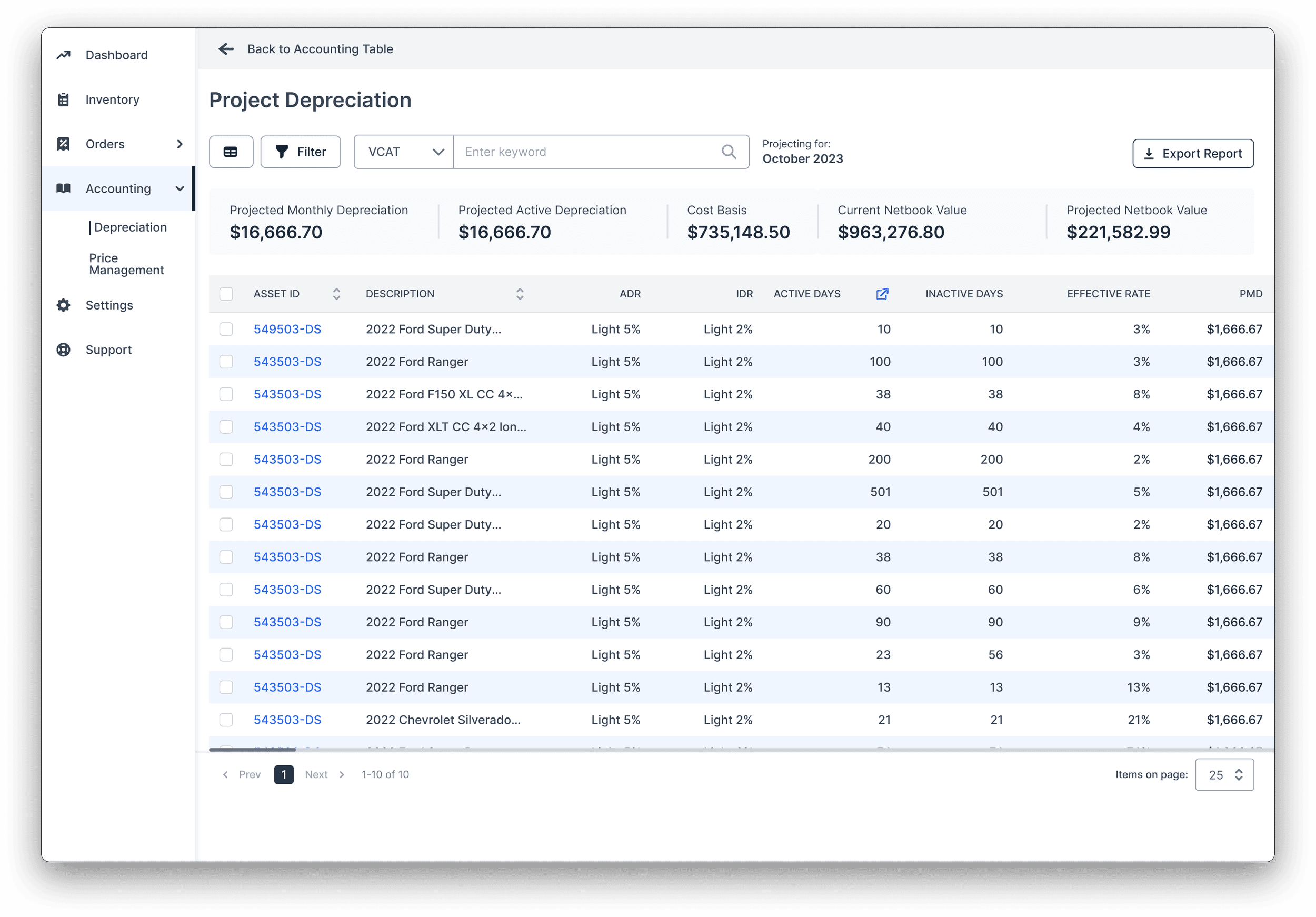
Accounting — projection reports, depreciation tracking, and GP integration meant accountants no longer had to manually reconcile data across systems.
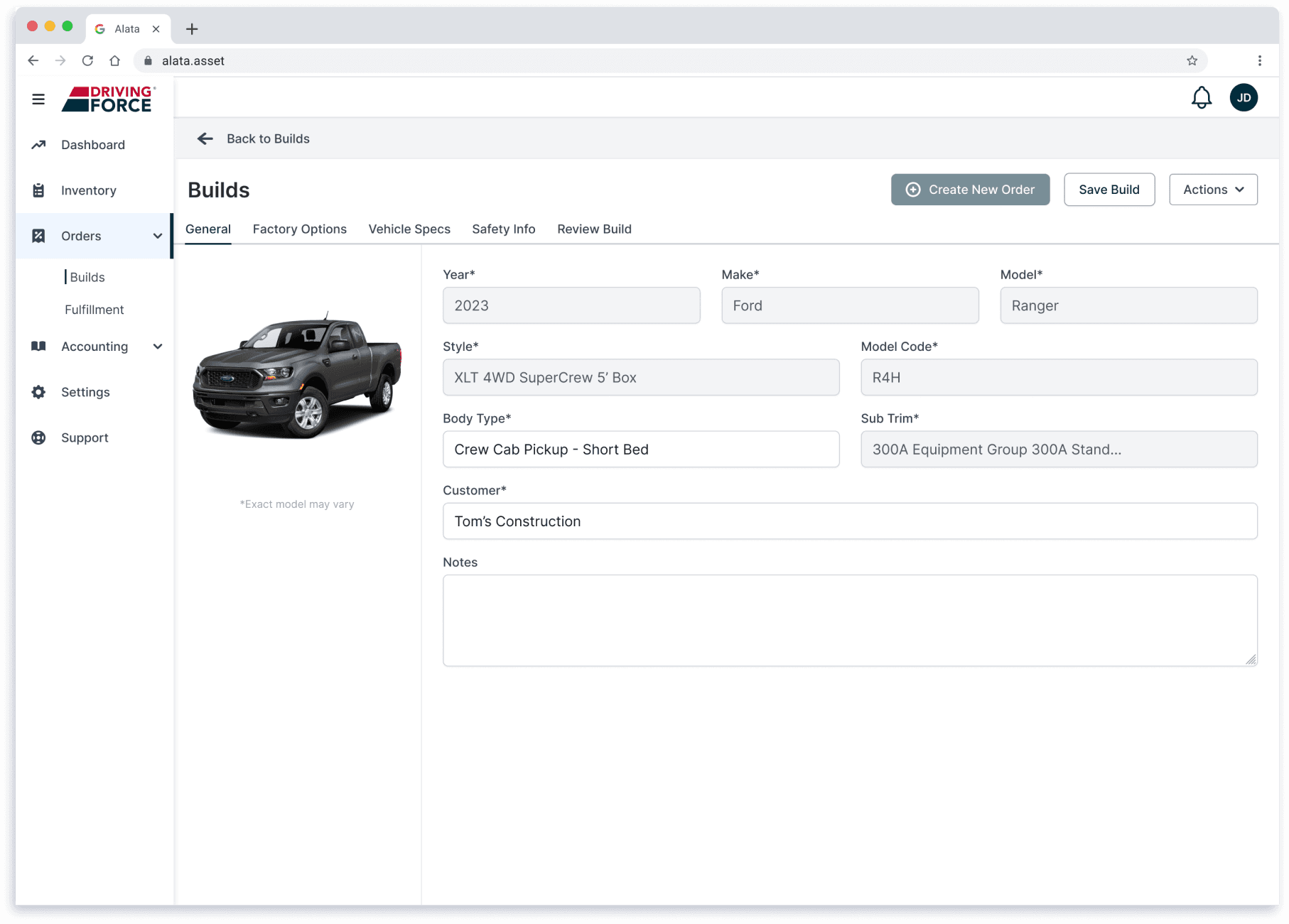
Vehicle Ordering — ChromeData integration auto-populated vehicle specs, upgrades, and safety ratings that salespeople previously sourced manually. "Save a Build" let them reorder without starting from scratch.
Results & Impact
What this product can do is way beyond what I could've dreamt of.
Justin K.. (Accounting Director)
300+
active users at launch
$25k/month
average savings in maintenance costs
$130M
business powered by new platform
This one is structured differently from the other two by design — the two-chapter format earns its length because each phase has a distinct outcome. The PoC closes with a business decision, the MVP closes with hard numbers. That arc is stronger than a single linear story.
Thanks for reading!
Want to chat about a project? Drop me a line


